Of Moose, Men and Minutes
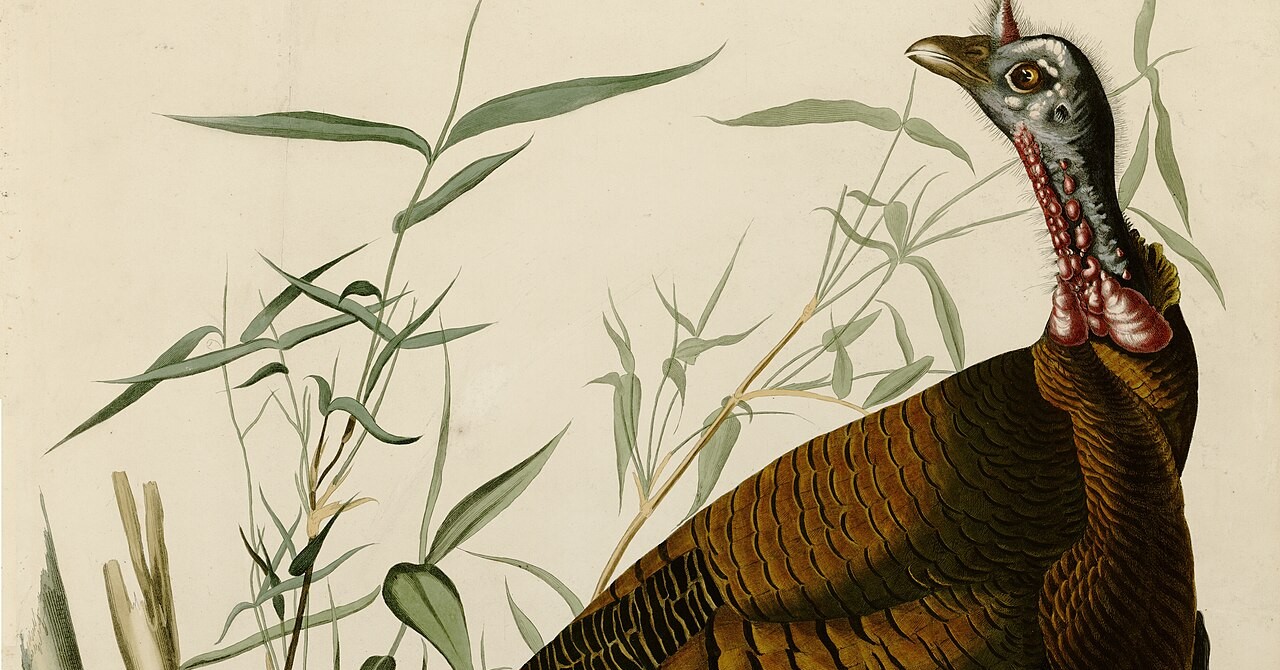
Animal minutiae from the New England municipal record.
 Lead image: John James Audubon, "White-Headed Eagle" Plate 31 from Birds of America (1827-1838). Public Domain, via Wikimedia Commons.

I read a lot of New England town meeting minutes for work, and almost nobody else does, and the work is mostly serious, zoning fights and fiscal mechanics and the slow accumulating decisions that determine what a town is becoming. But every so often, while combing through a Conservation Commission's notes on a dredge-and-fill application or an airport committee's monthly report, you trip over a paragraph that doesn't quite belong in a policy document, except that it does, because the towns have been recording all of this in plain text the whole time, in records they publish on their own websites for anyone to read. So consider this seven things I found hiding in plain sight, in the place where they were always going to be.
Rumford, Maine: the moose that has been hanging around
 John James Audubon & John Bachman, "Moose Deer. Cervus Alces, Linn. Old Male & Young" from The Viviparous Quadrupeds of North America (1845-1848). Public Domain, via Wikimedia Commons (Digital Public Library of America).

The February 20, 2025 Rumford Board of Selectmen minutes contain a Town Manager's report that opens, as you would expect, with thanks to Public Works for keeping the roads clear after a snowstorm. The next sentence introduces a moose. "Many in the community are aware," writes Town Manager O'Keefe into the official record, "of the moose that has been hanging around the town." O'Keefe goes on to note, in the minutes, that he has been "enjoying the updates from Animal Control." The item closes with a warm-toned safety reminder: "We encourage citizens to stay safe as the moose is still a wild animal." There is no follow-up on the moose in later meetings, nor any sense from the minutes that one was needed. The moose was there, and the town manager was reading the dispatches, and that was the news.
Cumberland, Maine: the chicken-or-hen question
 Joseph Williamson Ludlow, lithograph of chicken breeds (1899). Public Domain, via Wikimedia Commons.
.jpg)
In January 2026 the Cumberland Planning Board took up Chapter 315-39 of the town code, the domesticated chickens ordinance, after some recent state legislation prompted a review. The recommended amendments included a precise vocabulary swap: "Replace the word 'chickens' with the word 'hens'." The edit is not decorative. In municipal-ordinance language a chicken can include a rooster, while a hen cannot, and Cumberland is making sure that any future debate about whose property has whose birds operates on the right noun. The same package raised the lot-size threshold from one acre to two and clarified that lots of two acres or more have no upper limit on hens, a quiet expansion in where Cumberland's hens, formerly Cumberland's chickens, are welcome.
Belfast, Maine: persuaded to leave
 John James Audubon, "Canada Goose" Plate 201 from Birds of America (1827-1838). Public Domain, via Wikimedia Commons.

Belfast has a municipal airport, and its Airport Committee meets every month, and tucked into every set of minutes is a standing item called Wildlife Management. The reports tend to be brief and steady. In August 2024 the committee recorded that "Recent mowing attracted some resident Canada Geese but they were persuaded to leave." In September the program seemed to be "working reasonably well." In October there were "still occasional turkeys sighted but few Canada geese." November was the same. The phrasing across the months is consistent and faintly tender. "Persuaded to leave" is the warmest formulation I have come across for goose-deterrence work, and the steady cadence of the reports suggests that Belfast's understanding with the resident geese is less a series of incidents than an ongoing arrangement, conducted respectfully on both sides.
Hanover, New Hampshire: the deer team
 John James Audubon & John Bachman, "Common or Virginian Deer (Cervus Virginianus, Gmel), Old male and female" from The Viviparous Quadrupeds of North America (1845-1848). Public Domain, via Wikimedia Commons (Digital Public Library of America).
,_Old_male_and_female_-_DPLA_-_e210d5cba1350b01c7f9e1c4ddf9c029.jpg)
Hanover's Selectboard, working in coordination with New Hampshire Fish and Game's Deer Management Assistance Program, refers without irony to the town's "deer team." The program is New Hampshire's framework for adjusting deer-population goals on a town-by-town basis, with municipalities supplying access to town-owned parcels for the state's management work. The team coordinates which parcels can be enrolled, gathers written permission from individual landowners, and produces parcel maps for the state. A 2025 update noted that the town would not be proposing changes to the management area this year, because compliance with program rules requires written permission from every participating landowner plus a complete map, and the team had limited bandwidth that quarter. The minutes do not say whether the deer themselves have been notified.
Eliot, Maine: the turtle crossing presentation
 John Edwards Holbrook, "Chelydra serpentina" plate from North American Herpetology (1842). Public Domain, via Wikimedia Commons.

Eliot's Conservation Commission February 2026 agenda includes an item, in full, "January 27, 2026, EFW Turtle Crossing Presentation follow up." I take this to mean someone gave the Commission a presentation about turtle road crossings at a previous meeting, and the Commission would now spend part of the next meeting discussing what to do with what they had learned. Maine's snapping turtles nest in June and cross roads in the process, sometimes the same road repeatedly, and at least one Maine town has been thinking about it on the record.
Wolfeboro, New Hampshire: the dark sky, the eagles, the dock
John James Audubon, "White-Headed Eagle" Plate 31 from Birds of America (1827-1838). Public Domain, via Wikimedia Commons.
Wolfeboro's Conservation Commission, reviewing a residential dredge-and-fill application for a dock on Lake Wentworth, noted that the site had "known bald eagles in the area." The state had already cleared the project ecologically, and the Commission could have left it there, but they attached a request anyway. If the new dock includes any lighting, it should comply with Wolfeboro's Dark Sky Ordinance, the residential-lighting provision designed to keep ambient light low at night. The Commission did not elaborate on the eagles' aesthetic preferences. The request stood.
Groton, Connecticut: Honkers
 "Canada Goose" from the Game Birds series (N40) for Allen & Ginter Cigarettes (1888-1890), Metropolitan Museum of Art. CC0, via Wikimedia Commons.
_for_Allen_%26_Ginter_Cigarettes_MET_DP839142.jpg)
Groton's Police, Animal Control, and Town Committee meeting minutes from April 2023 include a short paragraph that has stayed with me. It reads, in full: "Honkers" works year round to keep Eastern Point Beach free of Canada geese. This is done so that goose poop does not affect the water quality in a way that would cause the beach to be closed. I cannot find further information about Honkers in the public record, whether Honkers is a dog, a person, a contractor, or some other kind of working soul. The name is in quotes, the role is essential, the contribution is described with maximum bureaucratic clarity. The beach remains open.
A note on methodology
None of these were hard to find. The towns posted them on their own websites, in PDFs they generated themselves, in minutes of meetings open to the public. The records have been sitting there for months or years, patient, indexed by no one in particular. What I have come to appreciate, reading them week after week, is how unspectacular all of this is, the minutes don't dwell, the decisions are small, nobody is announcing anything. A planning board is changing a noun, a selectboard is reading a one-paragraph wildlife update, a conservation commission is making sure a dock doesn't startle the eagles, a town manager is writing into the public record that he has been enjoying the dispatches about a moose. The towns are doing the slow work of staying on speaking terms with their local fauna, one meeting at a time, and somewhere on a Connecticut beach Honkers is keeping the geese moving.