The Pickleball Boom Is Now a Line Item in Municipal Budgets
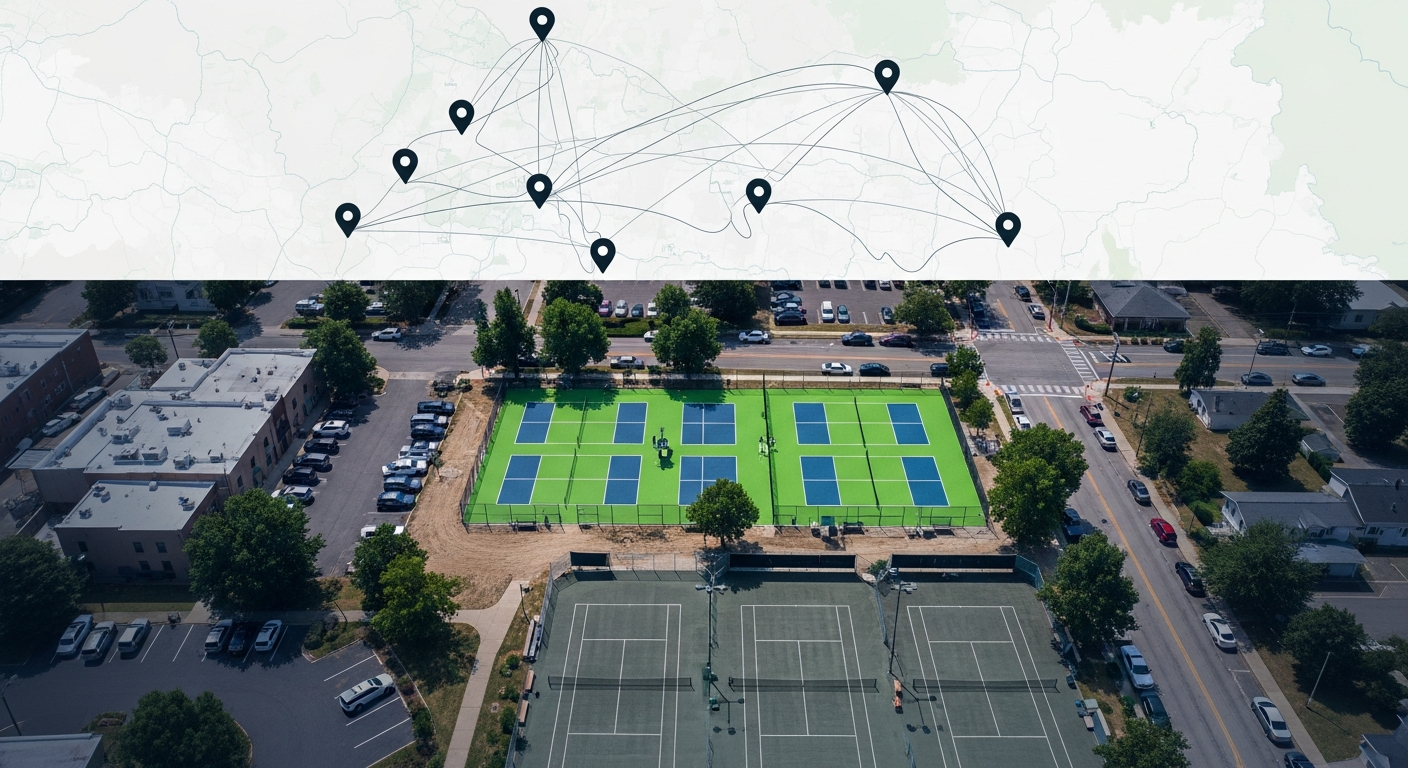
Analysis based on 29 pickleball-related signals detected across 14 municipalities in 9 states.
The Pattern
Pickleball went from backyard hobby to the fastest-growing sport in America. That's the consumer story. The municipal story is different, and it's playing out right now in parks commission minutes, public works reports, federal grant awards, and town council budgets across the country.
Our pipeline has detected 29 pickleball-related signals across 14 municipalities in 9 states. The signals range from brand-new court complexes and tennis court conversions to federal grants, community donations, rental agreements, and even a liquor license amendment for a pickleball venue. The pattern is consistent: pickleball is no longer a recreation trend. It's a capital improvement line item.
How Towns Are Spending
The spending shows up in several distinct forms:
| Type | Example | Location |
|---|---|---|
| New court complex | Sherwood Park Pickleball Court Complex (ARPA-funded) | Paso Robles, CA |
| Tennis court conversion | Converting existing tennis courts to pickleball | Lake Jackson, TX |
| Federal park grant | $750K for Jerry Matheson Park renovations including pickleball courts | Tomball, TX |
| Community donation | East Bay Pickleball Association donating amenities to Castro Park | El Cerrito, CA |
| Court renovation + lighting | Saul Alexander Pickleball Courts, energy-efficient lighting | Summerville, SC |
| Grant application | Town council approved grant application for pickleball courts | Pinetop-Lakeside, AZ |
| Budget line item | Ballfield lighting and pickleball courts, exploring TIF funding | Scarborough, ME |
| Rental agreement | Parks commission developing pickleball court rental program | Wisconsin Rapids, WI |
| Liquor ordinance | Amended liquor control ordinance for pickleball venue (Class Z) | Wheaton, IL |
This isn't one type of spending. It's the full lifecycle: federal grants flow to state agencies, state agencies subgrant to cities, cities convert existing infrastructure or build new, then communities self-organize around the facilities with donations, leagues, and rental programs.
Where It's Showing Up
| State | Municipalities | Signals |
|---|---|---|
| California | Paso Robles, Temple City, El Cerrito | 15 |
| Texas | Lake Jackson, Tomball (via TX Parks & Wildlife) | 4 |
| Maine | Belfast, Presque Isle, Scarborough | 3 |
| Arizona | Pinetop-Lakeside | 1 |
| South Carolina | Summerville | 1 |
| Wisconsin | Wisconsin Rapids | 1 |
| Massachusetts | Douglas | 1 |
| Idaho | Pocatello | 1 |
| Florida | Aventura (via FL DEP) | 1 |
California leads, but the geographic spread tells the real story. From Pinetop-Lakeside, Arizona (population 4,300) to Lake Jackson, Texas (population 27,000) to Scarborough, Maine (population 22,000), the pickleball infrastructure buildout is happening in exactly the kind of small-to-mid-size municipalities our pipeline monitors.
The Funding Stack
What makes pickleball interesting from a municipal finance perspective is the diversity of funding sources showing up in the data:
Federal grants. The Department of Interior is funding pickleball courts through state parks and wildlife agencies. A $750K grant to Texas Parks & Wildlife for Tomball's Jerry Matheson Park includes pickleball alongside playgrounds, splash pads, and pool renovations. These grants flow through USAspending.gov, which our federal grants layer monitors daily.
ARPA funds. Paso Robles is using American Rescue Plan Act dollars for its Sherwood Park Pickleball Court Complex. ARPA funds are one-time federal stimulus money that cities are deploying on exactly this kind of community infrastructure.
TIF districts. Scarborough, Maine is exploring Tax Increment Financing for pickleball courts and ballfield lighting. TIF is a tool cities use to fund infrastructure in designated development zones, and it's showing up in budget Q&A documents alongside $655K in other capital projects.
Private donations. The East Bay Pickleball Association offered to fund water fountains and shaded seating at El Cerrito's Castro Park courts. Summerville, SC's court renovation was funded by a "significant donation from a local community member."
Municipal operating budgets. Wisconsin Rapids is developing a rental agreement for pickleball courts, turning them into a revenue-generating facility. Douglas, MA approved a storage box request for the local pickleball club, a small but telling indicator of institutionalization.
The Paso Robles Story
One town stands out. Paso Robles, California appears in 13 of the 29 signals, all from weekly Public Works project reports. The town is building an entirely new Sherwood Park Pickleball Court Complex, tracked week by week through our pipeline as it progresses from planning through construction.
What makes Paso Robles useful is the longitudinal view. These aren't 13 separate events. They're the same project showing up in weekly progress reports over months, giving us a real-time view of a municipal construction timeline. When you monitor a town continuously, you don't just see that a project was approved. You see the progression: design, permitting, site prep, construction, paving, completion.
The Regulatory Angle
Temple City, California's Youth Committee flagged something notable: a reference to Carmel-by-the-Sea banning pickleball courts. While most municipalities are building courts, at least one is pushing back, likely driven by noise complaints, a well-documented friction point in residential areas.
Wheaton, Illinois took a different approach: amending their liquor control ordinance to create a "Class Z" license specifically for a pickleball venue. Pickleball is generating new business types that don't fit existing regulatory categories.
These regulatory signals, both permissive and restrictive, are the kind of early indicators that only show up in municipal documents. By the time a national trend piece covers "pickleball noise ordinances," the ordinances have already been drafted, debated, and voted on in town council minutes.
What This Means
Pickleball infrastructure is a small but real signal in the broader municipal recreation spending story. The 29 signals we've detected are almost certainly undercounting the actual activity, since our pipeline currently covers 1,800+ municipalities out of 19,500 nationally.
The interesting part isn't the sport. It's the pattern: a consumer trend becomes a community demand, which becomes a parks commission agenda item, which becomes a budget line item, which becomes a federal grant application, which becomes a construction contract. Every step in that chain produces a public document. We read them all.
Want this data?
Municipal recreation and infrastructure spending signals, tracked daily. From federal grants to zoning amendments to construction contracts.
- Download a sample of our signal data (CSV) -- 50 entity-resolved signals showing the data structure
- See our full methodology -- coverage, freshness, known gaps
- Get municipal spending data -- tell us which categories or regions you're watching
Data current as of March 2026. Signals sourced from municipal minutes, agendas, budgets, press releases, federal grant awards, and public works reports across the Municipal Alpha pipeline.