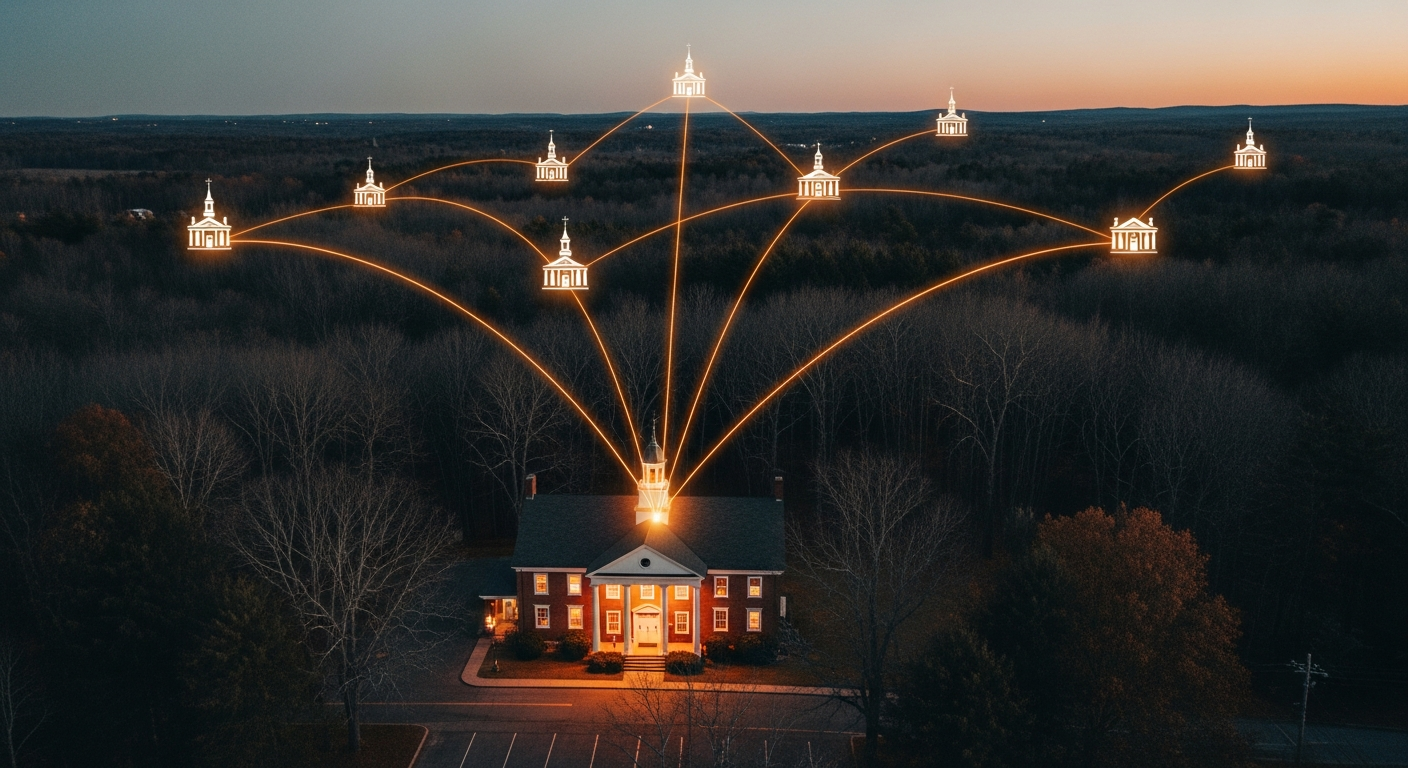
On April 6, 2026, Maine's House passed LD 307, what would have become the country's first state-level moratorium on large-scale data centers, on an 82-62 vote. Eighteen days later Governor Janet Mills vetoed it, and announced the same day that she had signed LD 713, which prohibits data centers from claiming tax incentives under Maine's business development programs. On April 29 the House attempted to override and failed 72-65. The moratorium died, and that day Mills issued an executive order establishing the Maine Data Center Advisory Council. Maine ended up with a different shape of restriction. What's worth showing is that the signal of what was coming sat in the record long before any of those state-level votes. Starting months earlier, Maine town halls took up the same question one after another, in different kinds of meetings, after LD 307 had been filed as a study bill. Whether the bill prompted them, or they simply arrived at the same worry, the records we read do not say.
4.6 moGorham's first formal action to the House vote
Nov 18, 2025first move to restrict, Gorham Town Council
Apr 6, 2026LD 307 passes the House, 82-62
Gorham
Lewiston
Rockland
Bangor
Winthrop
State House
What you're about to read
Every municipal entry links to a real document on a Maine town or city website. Different towns, different kinds of body, one pattern forming in real time. Wiscasset, which handled its prospect largely in executive session, is shown from local press reporting. The bill's sponsor represents Freeport, about 20 miles from the first town to act.
The Signal Chain
January 2025
State House Energy, Utilities & Technology Committee
Rep. Melanie Sachs (D-Freeport), chair of the Energy, Utilities and Technology Committee, introduces LD 307 as a concept draft. A study bill, not a ban. No moratorium language yet.
"While other states are scrambling to fix programs they put in place too quickly and without sufficient guardrails, Maine has an opportunity to thoughtfully consider the direction we want to take."
Rep. Melanie Sachs (D-Freeport), House Democrats press release
Eight months. The bill sits. Then a town finds itself in the middle of it.
September 2025
Wiscasset Town-owned land · press report
A data center is proposed for town-owned land on Old Ferry Road. The town's economic development director puts its value at $5 billion. The developer is not named: the town manager signed a non-disclosure agreement with the interested party on August 19, and the selectboard discussed it in executive session.
October 7, 2025
Wiscasset Selectboard
Residents of Wiscasset and neighboring Westport Island speak at the selectboard meeting, largely against a data center on the site.
November 18, 2025
Gorham Town Council
The first formal municipal action in a public document. One line on a council agenda, sponsored by Councilor Willis. The bill's sponsor, Rep. Sachs, represents Freeport, about 20 miles away.
"Action to consider amending the Land Use & Development Code to restrict large scale data centers."
Gorham Town Council Agenda, Item #2025-11-08. Councilor Willis, sponsor.
December 16, 2025
Lewiston City Council
Item 11 on the council agenda. A $300 million AI data center in a historic mill building. The developer had signed a non-binding letter of intent in June; councilors did not see the detailed proposal until November. One councilor received more than 100 emails and phone calls about it, and one of them favored it. The council rejected it unanimously.
"Order, Approving the Joint Development Agreement with MillCompute LLC to develop a Tier III Artificial Intelligence (AI) Data and Technology Center in Bates Mill 3."
Lewiston City Council Agenda, December 16, 2025
Wiscasset's residents pushed back on a $5B prospect. Lewiston rejected a $300M deal. Now the legislature moves.
February 4, 2026
Rockland Energy & Sustainability Committee
A sustainability committee in a city of about 7,000 puts a data center ordinance at the top of its agenda.
"Data Center Ordinance": primary discussion topic.
Rockland Energy and Sustainability Advisory Committee Agenda, February 4, 2026
February 5, 2026
State House Energy, Utilities & Technology Committee
LD 307 gets its public hearing. By now Gorham, Lewiston and Rockland have all taken up data centers in public documents, and Wiscasset's prospect has been in the press. Whether the committee drew on them, the records we read do not say.
February 12, 2026
State House Committee Work Session
Sachs proposes the moratorium amendment. The study bill becomes a ban. Data centers requiring more than 20 megawatts cannot apply until November 2027.
"These data centers as we have seen in other states have impacts for grid resilience, they have impacts for environmental resources, so we just wanted to take a proactive approach and do it unlike any other state has so far."
Rep. Melanie Sachs (D-Freeport), Maine Public, February 2026
February 20, 2026
Bangor Planning Division
Bangor's planning staff writes a detailed memo to the Business & Economic Development Committee. Seven pages covering energy strain, water consumption, zoning conflicts, noise, and economic trade-offs, addressed to elected officials who have not yet seen a data center proposal.
"This memo outlines the challenges large-scale data centers could pose to Bangor... Data centers are among the most electricity-intensive land uses."
Bangor Planning Division Memo to B&ED Committee, February 20, 2026
March 2, 2026
Bangor Business & Economic Dev Committee
The committee receives the planning memo. Councilors request a moratorium. Staff begins drafting emergency ordinance language.
March 11, 2026
Winthrop Planning Board
Even small-town planning boards are now paying attention.
"A brief discussion about regulating data centers ensued."
Winthrop Planning Board Minutes, March 11, 2026
March 23, 2026
Bangor Planning Division
The emergency moratorium ordinance is drafted. Retroactive to March 2. Staff requests the council waive first reading and fast-track with a two-thirds vote.
"The City of Bangor is suddenly experiencing increased development pressure from data centers, which are a rapidly growing and evolving land use that typically require substantial electricity and water usage... Because this development pressure was unanticipated, existing ordinances and development standards do not adequately address the unique infrastructure demands, environmental impacts, impacts to neighboring property owners, and operational characteristics of data centers."
Bangor Emergency Moratorium Ordinance Draft, March 23, 2026
April 6, 2026
Maine State House
LD 307 passes the House, 82-62. A moratorium on new data centers requiring more than 20 megawatts, intended to run through November 2027. The bill that started as a study in January 2025 had become a moratorium in February 2026.
April 24, 2026
Governor Executive veto
Governor Mills vetoes LD 307. Mills supports a temporary moratorium in principle but objects to the bill's scope. She would have signed it with an exemption for a data center project already underway at the former Androscoggin Mill in Jay. The Town of Jay, Franklin County Commissioners, and the regional Chamber of Commerce had each written supporting the exemption.
April 23 to 24, 2026
Governor A different shape of restriction
Mills signs LD 713, which prohibits data centers from claiming tax incentives under Maine's business development programs. The bill's sponsor gives the signing as Thursday, April 23; the Governor announced it on April 24, alongside the LD 307 veto.
April 29, 2026
Maine State House Override vote
Override fails 72-65. Ten fewer members voted yes than on April 6, and the two-thirds threshold was out of reach. The veto stands.
April 29, 2026
Governor Same-day parallel action
On the same day as the failed override, Mills issues an executive order establishing the Maine Data Center Advisory Council. The moratorium shape died; a tax-incentive-denial shape plus an executive governance framework landed in its place. Maine ended up with substantive data center restrictions, just not the moratorium structure the bill envisioned.
Read Together
No single town hall shows it. Read together, they show the question arriving months before the State House took it up.
The pattern wasn't visible from any single town hall. It was scattered across a one-line agenda item in Gorham, a rejected $300 million deal in Lewiston, a sustainability committee in Rockland, a planning division memo in Bangor, and a planning board discussion in Winthrop. Different bodies, different document types, different concerns. The same question.
The bill's sponsor, Rep. Melanie Sachs, represents Freeport, about 20 miles from Gorham, where the first formal action to restrict data centers in a Maine public record appeared.
Not Just Maine
In the same months, municipal documents in Georgia, Idaho, Iowa, Nevada, Massachusetts, Arkansas, Colorado, and Virginia showed towns having the same conversation. Maine was first to put a state-level moratorium to a chamber vote, and the outcome changed in three weeks. The question for other states isn't whether the pattern follows. It's which town halls are signaling, and what shape the response will take when it reaches the legislature.
For a broader cut across the corpus, see Data Centers Are Contested Across the Country, and Towns Are Now Writing the Rules.
We found this one early. We can do the same on signals that matter for your portfolio or coverage area.
The corpus surfaces municipal regulatory patterns months before they reach state legislatures or national reporting. If there's a vertical, region, or policy theme you'd want this kind of early read on, we can produce a targeted analysis from the underlying records.
Get in touch
Methodology note: This signal chain was assembled from public municipal documents published on the official websites of Gorham, Lewiston, Rockland, Bangor, and Winthrop, Maine. Every municipal link goes to the original source document. No proprietary data sources were used for the municipal layer. The Wiscasset entries come from local press reporting (Portland Press Herald, Wiscasset Newspaper), and the Lewiston vote and correspondence figures from GovTech. The state-legislative outcomes (veto, override-vote failure, LD 713 signing, executive order) were verified against the Office of the Governor of Maine's published statements, Maine Morning Star, Maine Public Radio, Press Herald, and TechCrunch reporting; those were not captured in our automated pipeline at the time of the events.
Corrected October 9, 2026. An earlier version counted six Maine towns, including a Sidney entry whose source document came from Sidney, Nebraska; Sidney has been removed. It dated the Winthrop discussion April 8; the minutes are from the March 11 meeting. It placed Freeport ten miles south of Gorham; it is about 20 miles northeast. It described a Wiscasset group and a November 4 vote to pause talks that we could not source, and those are removed. It said "five months" from the first signal; the first formal action, in Gorham on November 18, 2025, came about 4.6 months before the April 6 House vote. The headline count of towns and its denominator were removed: the towns shown are examples from the record, not a total.