CASE STUDY
While Massachusetts Towns Must Make Room for Battery Parks, New York Towns Pause or Ban Them
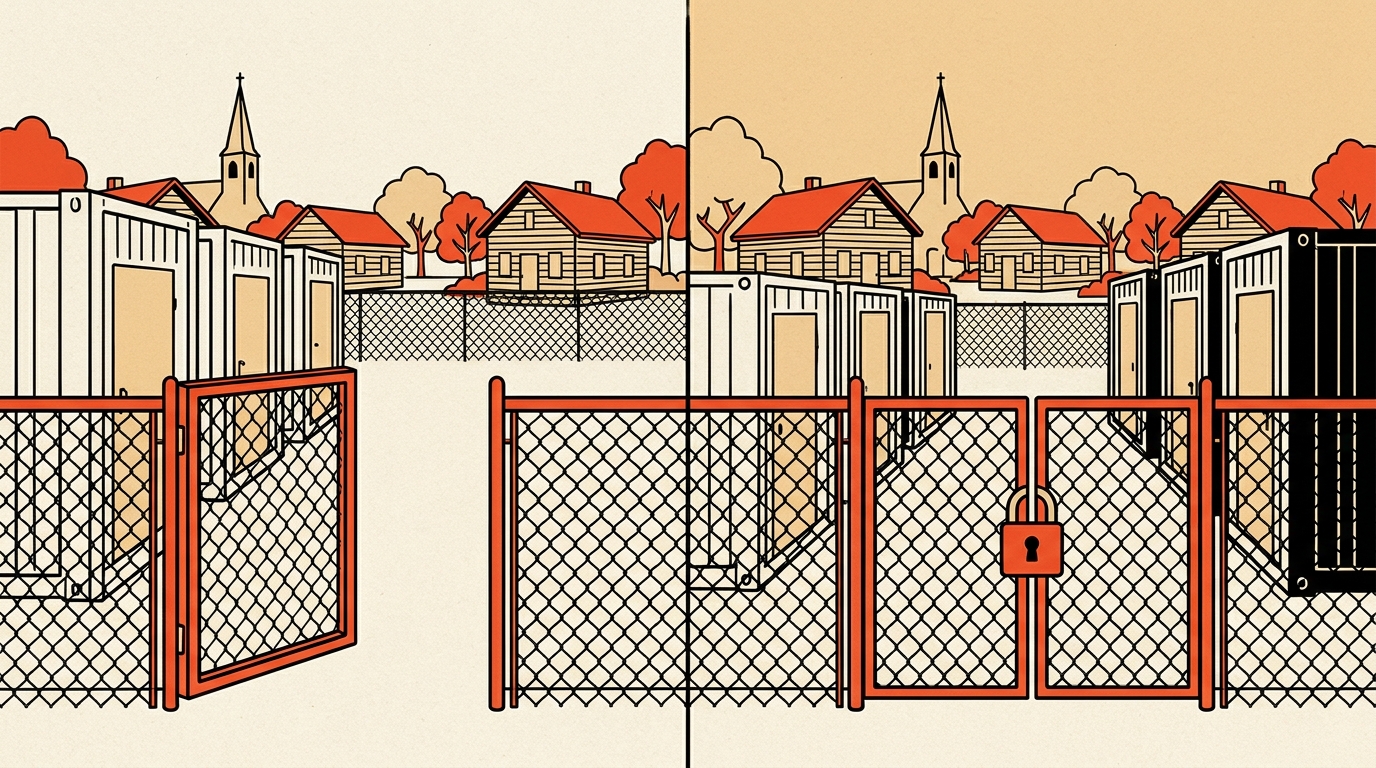
Battery parks store power for the grid, and every town decides where they can go. In Massachusetts, towns must take permit applications for them from October 1, 2026, and a town ban was already struck down. In New York, towns are pausing them, and on August 26, 2026 the City of Rome banned them in every zone. Both directions are written down in the towns’ own minutes.
The question
A battery park is a row of big battery boxes. They fill up with power from the grid and send it back when people need it most. Power companies want more of them. Neighbors and fire chiefs worry about fires. Each town decides where they can go, or if they can go at all, and that choice is written down.
Two states, opposite directions
Massachusetts towns have to make room. New York towns pause or ban.
In Massachusetts, a town cannot just say no. In 2023 the state Attorney General struck down Wendell’s ban on battery parks, because the town’s record lacked “articulated evidence of public health, safety or welfare concerns sufficient to justify the prohibition.” Foley Hoag, April 4, 2023: the Attorney General on Wendell's ban
New state rules go further. For smaller projects, towns “must begin accepting” one combined permit application “no later than October 1, 2026.” A town that has not decided within 12 months loses the say: “the project receives constructive approval.” Foley Hoag, June 2026: the new Massachusetts siting rules
New York has no rule like that, and its towns are using the time. Batavia’s pause points to “fires at three different BESS facilities in the State of New York since May 2023.” City Council minutes, April 13, 2026
Swansea, Massachusetts
Mar 16, 2026
Apr 6, 2026
May 6, 2026
Rome, New York
Jun 2, 2026
Jun 10, 2026
Aug 11, 2026
Aug 26, 2026
Sep 1, 2026
Swansea’s town meeting vote on Article 26 was not in the town records we read as of October 16, 2026.
Where it is on record now
Lysander, New York
Large battery parks have been on pause for about two and a half years. On June 18, 2026 the Town Board extended the pause to December 19, 2026. The town engineer raised fire risk, since fire protection in the town comes “primarily by volunteer fire departments.”
Alfred, New York
On July 9, 2026 the Town Board approved a 12-month pause on large battery parks, 5-0. The supervisor said the Planning Board will write laws “as restrictive as possible to protect the Town in regards to Data Centers and Battery storage.”
Source: Town Board minutes, June 11, 2026 · Town Board minutes, July 9, 2026
Glen Cove, New York
The city’s one-year pause from 2025 now runs to April 28, 2027. Building a battery park in the meantime carries a fine of “one thousand ($1,000) dollars for each day each violation exists.”
Batavia, New York
On April 13, 2026 the City Council voted 7-0 for a six-month pause on battery storage permits, to study fire safety, gas leaks and how close they may sit to homes.
Groton, Massachusetts
The town’s own electric department wants town land at 600 Cow Pond Brook Road for a battery, a placeholder article on the town meeting warrant. The same review lists the state permit rules that “take effect statewide on October 1, 2026.”
Grand County, Colorado
The county has a pause on large commercial solar. On September 1, 2026 the commissioners let the local electric co-op build a battery anyway, unanimously, once it gets a special use permit. The minutes say the pause was meant for solar farms “impacting view corridors, not utility battery projects.”
Pauses end on a date. The New York towns above say in their minutes what they plan to write before theirs run out.
Why it matters
Where a battery park can go is decided one town at a time, and the answer flips at the state line. Developers, power companies, equipment makers, fire safety firms and the engineers who draw the site plans all live with those decisions, and each one sits in a town’s minutes months before anything gets built. Tell us your market in the box below, and we will look for it there.
METHODOLOGY: Every town example above comes from the town’s own record, linked beside it. Agendas, packets and warrants show what was proposed; we say adopted or voted only where minutes or council proceedings show it. The two lines on Massachusetts state law come from the law firm pages linked beside them.
GET IN TOUCH
What would this look like for you?
We'll show you what the record says about it, as a one-time deep dive or an ongoing service. Your first consultation is free.